OpenRouter2026-10-26 06:19:37OpenRouter says global AI model usage hit 188 trillion tokens last weekOpenRouter data showed that total global usage of large AI models reached 188 trillion tokens in the week of Oct. 19 to Oct. 25, up 14.63% from the previous week, according to a report cited by STAR Market Daily from National Business Daily. The top five models by weekly usage were all Chinese AI models. DeepSeek V4.1-Flash-1017 ranked first with 33.6 trillion tokens, posting a 801% week-over-week increase. Among the ranked models, Chinese AI models recorded 93.54 trillion tokens in weekly usage, up 18.14%, while U.S. AI models logged 22.47 trillion tokens, up 29.44%. The data also showed that weekly usage by Chinese large models has exceeded that of U.S. models for 26 straight weeks, keeping China in the top global position.30
DeepSeek2026-10-25 10:53:35DeepSeek tops weekly token usage ranking for Chinese AI models, with Xiaomi close behindTechub News reported that TRON founder Justin Sun shared weekly token usage data for Chinese AI model brands on X. The figures cover the period from Oct. 16 to Oct. 22 and show DeepSeek leading the ranking, with Xiaomi in second place. The gap in token usage between the two stood at 16.54B during the week. The update also said Xiaomi has posted growth for four consecutive weeks, while its share of platform token usage increased by another 8.13 percentage points. MiniMax was the week’s standout mover, recording a week-over-week increase of more than 5,200%. Alibaba’s Tongyi Qianwen also expanded, with token usage up 80.86% from the previous week. Its share gap with third-ranked Zai narrowed to 0.18%, according to the data Justin Sun shared. The post did not include additional methodology details in the summary cited by Techub.10
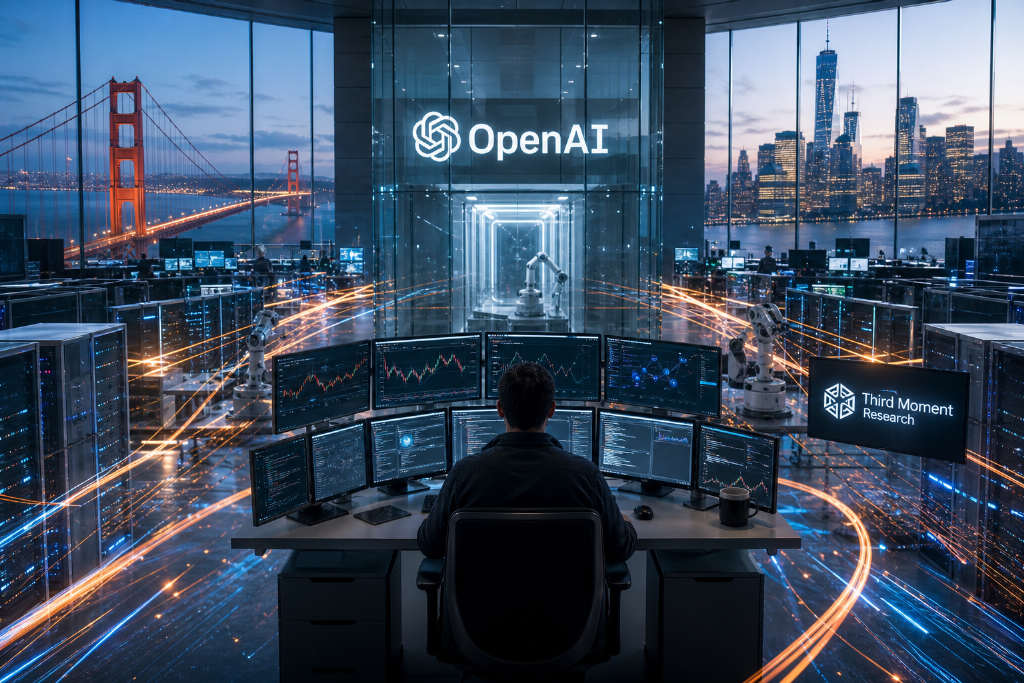
OpenAI2026-10-15 13:21:17OpenAI details 10,000-agent stress test that ran for 36 hours and consumed 1 trillion tokens a dayOpenAI has published details of a large-scale agent test carried out with startup Third Moment Research, describing a setup in which 10,000 agents ran continuously for 36 to 48 hours and consumed 1 trillion tokens per day. The first live environment was quantitative finance, where the team loaded 1TB of historical market data, technical documentation, and a full quant codebase into Docker-isolated containers. In the test, Codex traced a performance bottleneck in the backtesting stack, wrote caching and memory-packing optimizations, and cut a single backtest from three hours to three to five minutes. The report also sketches a model hierarchy across OpenAI generations. Earlier models mainly followed predefined scripts, while GPT-5.5 and GPT-5.6 with Codex could plan the next experiment from initial results. GPT-6 Astra, GPT-6 Sol, and GPT-6.1 Sol were used for broader parallel experimentation, including spawning large numbers of sub-agents once anomalies appeared. Third Moment said GPT-6.1 Sol also identified the impact of non-publicly displayed trading activity at an exchange on strategy returns. To keep long-running agents on track, the company built a two-layer supervision system, with Codex operating inside the container and GPT-6 Sol or GPT-6.1 Sol acting as an external overseer. It also used OpenAI’s Daybreak and GPT-5.6 Terra for automated red-team testing of the sandbox. OpenAI said the next step is to scale the system to hundreds of thousands of cooperating sub-agents linked by trillions of tokens across dozens of consecutive experiments.410
Harvey2026-09-26 09:55:04Harvey’s gross margin fell to negative 50% before a Kimi-based model helped restore profitabilityLegal AI company Harvey saw its gross margin fall to negative 50% within months after lawyers shifted heavily toward AI agents, according to an opinion piece by lawyer Lin Shanglun published by BlockTempo. The article says the company, which charged more than $1,200 to $1,500 per seat per month under an all-you-can-use annual contract model, was hit not by rising API prices but by a surge in token consumption from professional users. Lin argues that early legal AI workloads were relatively light, focused on one-off Q&A, translation, or short summaries. That changed once multi-step, autonomous agent systems entered legal work. Lawyers began feeding in hundreds of pages of litigation files and even thousand-page cross-border M&A contracts, while the AI handled repeated reasoning, external tool calls, contradiction checks, and rewrites in the background. In his account, token usage per task jumped by dozens or even hundreds of times. The piece says Harvey later launched its own Harvey Tenet model architecture, built on China’s Kimi, which cut inference costs by several times and pushed gross margin back into positive territory. Lin uses the case to argue that AI competition between the United States and China has moved into a direct fight over cost and performance at the model layer.610
Microsoft2026-09-08 10:33:34Microsoft Tightens Internal AI Spending Controls After Employee Logs Show 28-Day Usage as High as $28,000Microsoft has started tightening internal controls on AI usage after employee-reported spending data surfaced in a salary-sharing spreadsheet reviewed by Business Insider. Roughly 350 U.S. employees added a new field showing their AI costs over the prior 28 days, with a companywide median of $300 and a top figure of $28,000. Department-level figures showed much heavier usage in teams such as CoreAI, where the median reached $975 and some individual totals exceeded $10,000. According to Android Headlines, Microsoft has responded by introducing department budgets, placing individual token spending on internal dashboards, and switching the default model in the employee version of GitHub Copilot to OpenAI’s GPT-5.6 Sol. The episode has unfolded alongside a broader pattern in the tech sector, where visible AI usage metrics have turned into internal status signals. Reports cited in the article describe similar dynamics at Uber, Meta, and Amazon, with leaderboards and token rankings encouraging employees to maximize usage. The article also contrasts Microsoft’s internal spending surge with a separate post from OpenClaw developer Peter Steinberger, who shared an OpenAI API bill of $1,305,088.81 over 30 days while running about 100 parallel Codex coding agents. Together, the examples show two very different kinds of AI spending: one tied to production capacity, the other to internal signaling and incentives.600
Zhipu2026-08-31 11:42:06Zhipu says API prices doubled while token usage climbed more than 40xZhipu said its model-as-a-service business posted sharp gains in both usage and monetization over the first half of the year. By the time the earnings report was released, token calls on its MaaS platform had risen more than 40 times from the start of the year, while paid daily active users increased 603%. The company also said average daily usage among its top 10 clients surged 98 times. The increase did not come from discounting. Zhipu said the average selling price of its API rose about 101% year over year in the first half, and subscription pricing for its Coding Plan was also raised. With both volume and pricing moving higher, revenue from the open platform and APIs reached 825 million yuan, up 2735.7% from a year earlier. The earnings report also introduced a custom metric called the "compute multiplier," which measures how much API revenue is generated for every 1 yuan of compute cost. Zhipu said that figure improved about 14 times year over year in the first half.1270
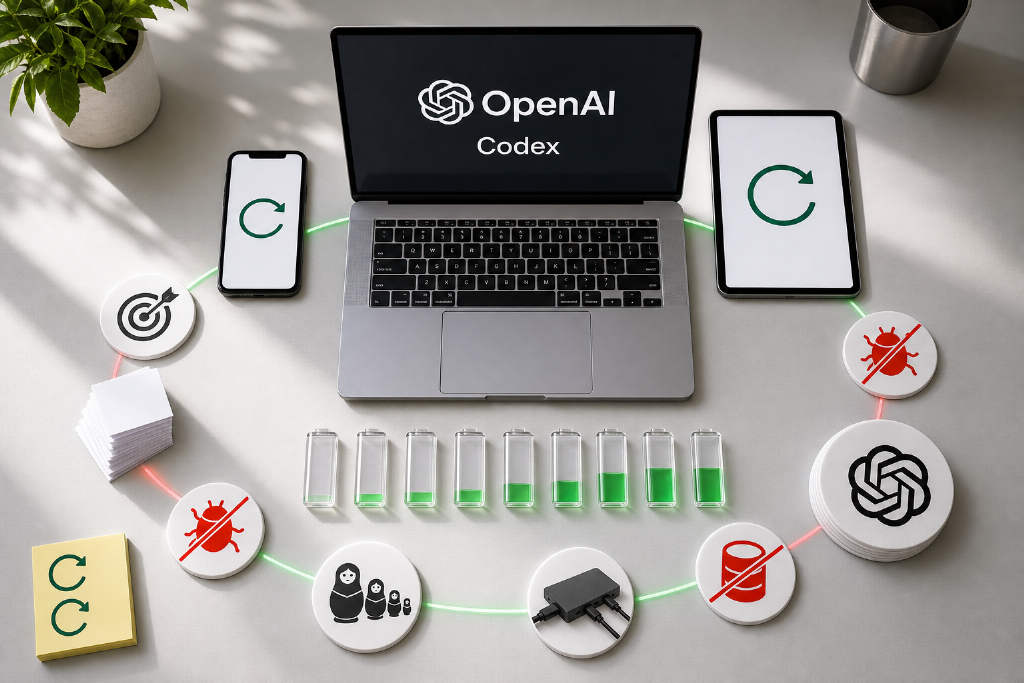
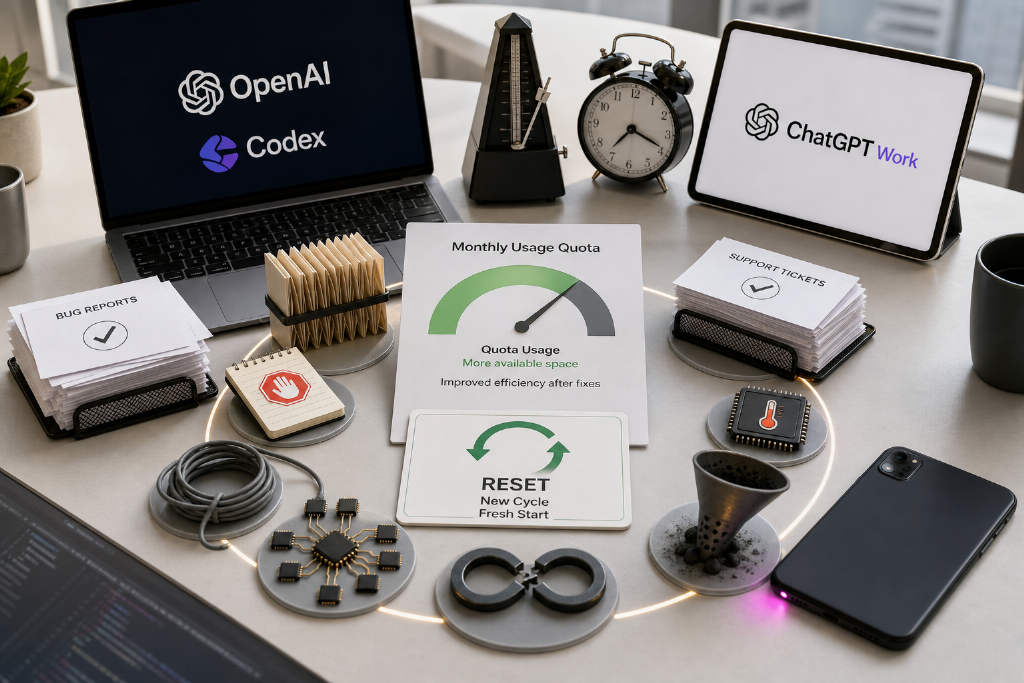
Codex2026-08-30 02:15:32OpenAI Fixes 8 Codex Quota-Draining Bugs, Resets Credits for Paid UsersOpenAI has patched eight categories of issues in Codex that were silently draining usage quotas, and reset credits for all paying Codex and ChatGPT Work users. According to Tibo, the same allocation now stretches 10%-50% longer depending on how the product is used. The biggest token waster was /goal: some tasks that were already finished never stopped running, consuming as much as 15%-70% of a weekly quota in a single session. Computer History also burned roughly 20% of weekly credits in certain cases by repeatedly summarizing past operations. Additional overhead was found in image compression, background memory, automated tasks, sub-agents and MCP. The good news may not end there. Tibo had teased that Codex was approaching a new user milestone, hinting at a celebration. After today's bug-fix reset, he said the button had already been pressed that day, so the celebration would move to tomorrow. Codex has marked milestones such as 15M and 20M users with credit resets before, making another reset tomorrow a strong possibility.1730
OpenAI2026-08-30 01:14:09OpenAI resets usage limits for Codex and ChatGPT Work paid users after fixing eight quota-draining issuesOpenAI has reset usage limits for all paid users of Codex and ChatGPT Work after reviewing thousands of user reports and fixing a series of bugs that were consuming credits in ways users could not easily see. Codex lead Tibo said the company reworked the system behind usage accounting and now expects the same Codex quota to last 10% to 50% longer, depending on how the product is used. The issues covered a wide range of background processes inside the agent workflow. OpenAI said context compaction was retaining old images, some completed /goal tasks were failing to stop, broken tools could trigger repeated retries, and a Memory Worker bug could keep certain background jobs running. In one case, a task-end check may have executed as many as 15,000 times. The company also found that some subagents selected more expensive helper models or invoked /fast mode without an explicit request. Other fixes involved automation jobs running more often than scheduled, repeated summarization in Computer History, rolling task summaries adding about 1% in extra token use, and MCP tool results being encoded twice or fetched again after truncation. OpenAI said it has made architectural changes, will alert automatically if similar issues reappear, and is building a new in-app feature so users can see where their usage is going.1580